
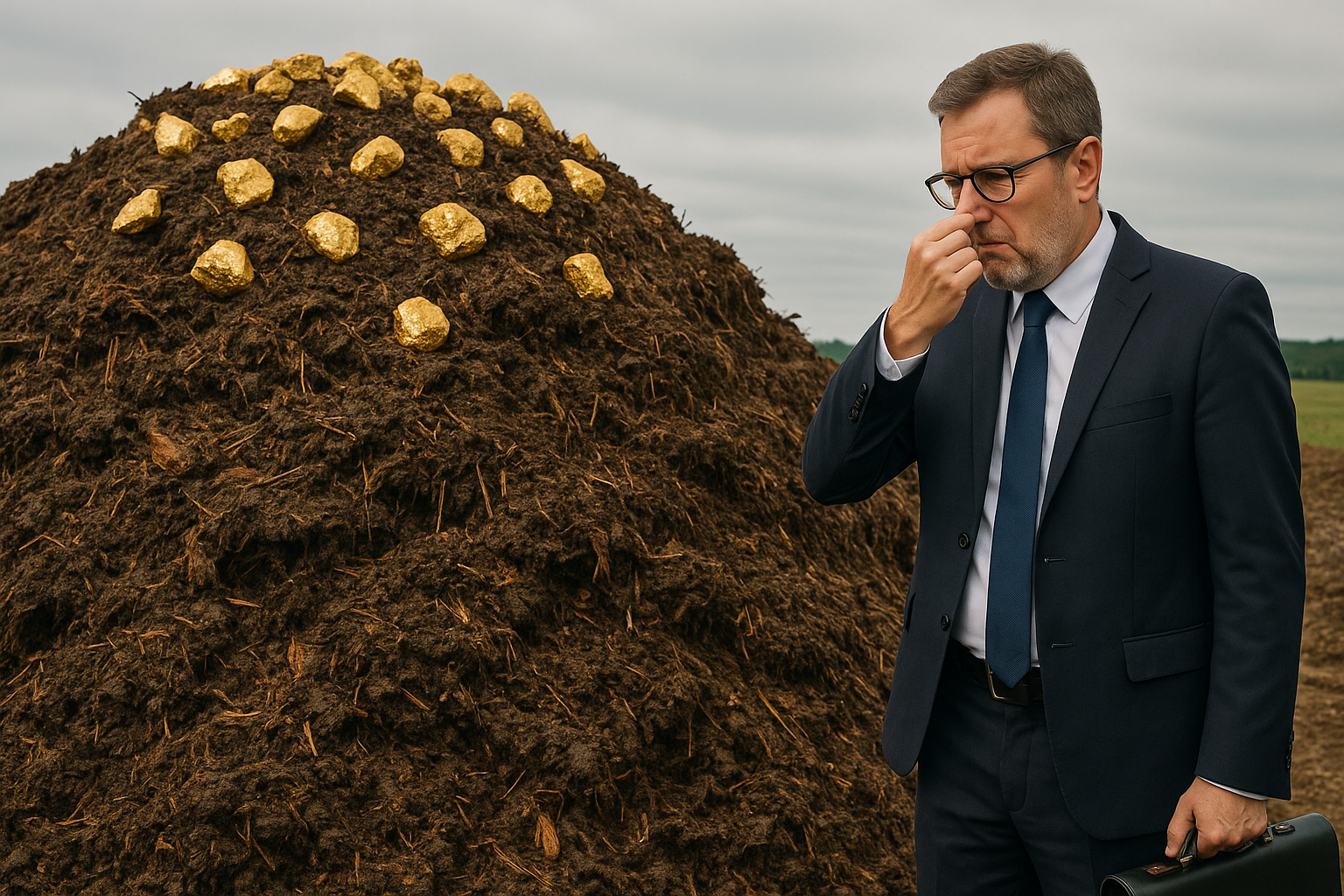
Let’s talk about startup investing, AKA the world’s most enthusiastic dumpster dive. There’s a concept I’ve used for years when I look at founders and their business plans. I call it The Turd-to-Gold Ratio. It’s my personal dashboard for figuring out when investors are rational geniuses, and when they’re a bunch of lemmings throwing hundred-dollar bills into a bonfire because their buddies are doing it.
Here’s the basic idea:
If you piled up every business plan in America from “best of the best” on the top to the steaming, sloppy, bottom-of-the-barrel diarrhea at the bottom, you’d get a bell curve of human ambition and delusion. Up top you’ve got real companies with revenue potential, actual customers, and founders who solve a problem people are willing to pay to fix.
- On the bottom?
- That’s where the gumbo lives.
- The cat dating apps.
- The third “Uber for dog poop” this week.
- The fintech startup that is targeting left-handed welders in Finland.
Every one of those plans smells like the morning after a Chipotle binge — but in the right market cycle? Money pours right into that sewer, baby.
Because…
The turd-to-gold ratio changes with the times.
When there’s too much money chasing too few plans, investors get bored and go deep into the stink pile.
They start funding stuff that should never have escaped the group chat.
“We love your vision.”
No you don’t. You love FOMO and cheap capital.
That’s how we get:
-
Juicero (AKA $120 million for a Wi-Fi juice bag squeezer).
-
WeWork thinking it was a tech company instead of a subletting operation for nerds.
-
The pet food subscription startup that pivoted to NFTs because the CEO owned a hoodie and believed in things.
It’s not that those founders are dumb — okay, some are — it’s that the ratio gets warped when the LP cavalry rides in with saddlebags full of cash and a mandate to “deploy capital.”
When money is easy and rates are low, turds float to the surface.
Now look at today.
Money is tight.
Investors got burned so hard they can still smell the smoke in their Patagonia vests.
People are losing jobs, severance packages are shrinking, and suddenly every middle manager who got laid off thinks, “Hell, if I’m going to be unemployed, I might as well chase the dream and finally launch my Tinder-for-cats idea.”
Imagine fluffy little Mittens swiping right with a cute persnickety nose.
“This furball likes long walks, laser pointers, and destroying your furniture at 3 am.”
Great. Does Mittens have disposable income?
No? Well, good luck raising seed capital, buddy.
But here’s where it gets funny:
When money is scarce, investors suddenly have standards again.
Gold gets ignored because everyone’s afraid to pick up the shovel.
Brilliant founders with legitimate solutions get ghosted, while the weirdos keep grinding because they don’t know any better. The market flips, and the turd-to-gold ratio becomes unpredictable.
Sometimes crap gets funded, and sometimes gold sits waiting at the altar like a lonely bride wondering where the hell her Series A went.
Takeaway for founders and investors:
-
When everyone’s funding everything, run away from the crowd.
That’s turd season.
Valuations will be stupid, diligence will be lazy, and the term sheet will smell like nonsense. -
When everyone’s scared of their own shadow, start digging.
That’s when gold gets left behind by risk-averse VCs waiting for someone else to lead.
And if you’re pitching?
Tilt your head, sniff your idea, and ask:
“Is this honestly gold? Or am I trying to sell shiny fertilizer?”
The truth nobody likes to say aloud:
Venture capital isn’t about intelligence.
It’s about cycles, fashion, and fear.
The Turd-to-Gold Ratio just tracks how bad the smell is at any given moment.
So next time someone says, “We’re raising a pre-seed round for a generative AI emotional wellness assistant for pet iguanas,” don’t laugh. In the right market, somebody will write that check.
And then brag about it on LinkedIn.
