
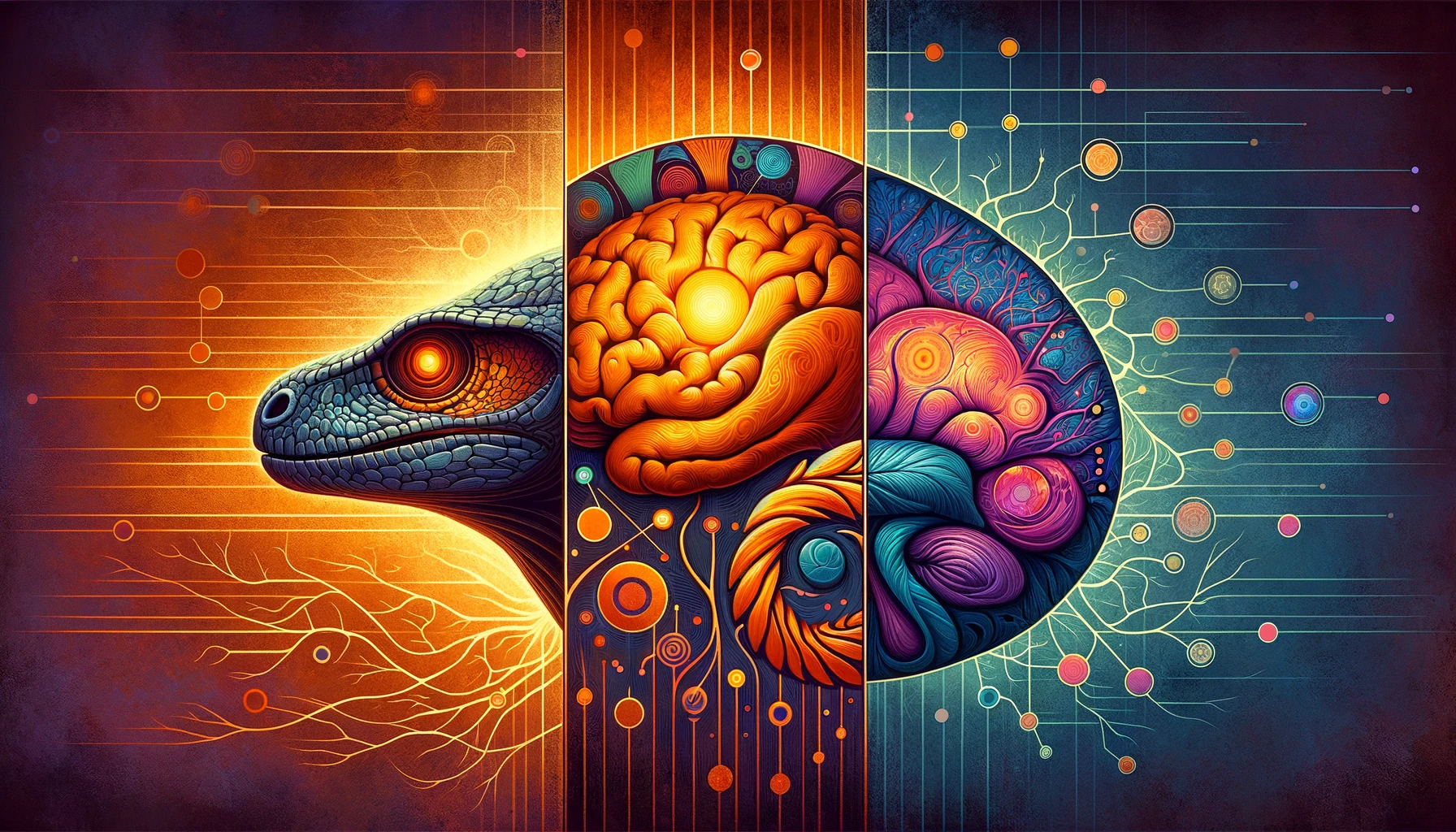
An Exploration of the Paper Titled: Understanding Our Triune Brain: Key to Mastering Our Actions and Emotions
Introduction In a fascinating exploration of human behavior, Dr. Andrew E. Budson sheds light on the intricate workings of our brain through the lens of the ‘Triune Brain’ theory, initially proposed by neuroscientist Paul MacLean. This concept, though not entirely accurate in the details, offers a powerful framework for understanding our often perplexing actions and emotions.
The Three Layers of the Human Brain
- The Reptilian Brain: This is the primal layer, handling basic survival instincts like hunger, thirst, and territoriality. It also manages habits and routine tasks, like riding a bike or placing keys in the same spot daily.
- The Paleomammalian Brain: This mid-layer is the center of our emotions, motivation, and memories. It’s responsible for behaviors influenced by emotions, such as parenting.
- The Neomammalian Brain: The most evolved layer, it governs language, abstract thinking, reasoning, and planning.
The Triune Brain in Action Dr. Budson illustrates how these layers interact in everyday scenarios. For instance, when we drive a car while deeply engrossed in conversation, it’s largely our reptilian brain at work, handling the driving. Meanwhile, our paleomammalian brain can trigger complex emotions from subconscious cues, like a familiar smell, which can evoke memories and feelings before our conscious neomammalian brain even processes them.
Implications in Neurological Conditions In cognitive behavioral neurology, understanding this tri-layered brain is crucial. For example, in Alzheimer’s, it’s often the paleomammalian and neomammalian brains that are affected, leaving the reptilian brain relatively intact. This explains why a patient might forget names but still remember how to play the piano.
The Choice Lies With Us Despite the evolution of the neomammalian brain over 10 million years, humans often succumb to the primal urges of the reptilian brain. Dr. Budson emphasizes that we have the power to choose – to either give in to these primitive desires or to use our evolved neocortex to control them.
Conclusion: The Power of Choice The triune brain model not only helps us understand our actions and emotions but also empowers us to make better choices. Recognizing which part of our brain is in control can lead to more mindful and deliberate actions.
Call to Action Interested in exploring how this knowledge can improve your life? Sign up for a free coaching session to delve deeper into harnessing your brain’s power for better decision-making and emotional well-being. Let’s embark on a journey to tap into the full potential of our evolved minds!

- Intentional Leadership – a guide to developing a leadership canvas to build and motivate high-performance teams.
- Cyphers & Sighs – a global high-tech suspense thriller of love, loyalty, and deceit.

Order Non-Fiction Here Order Fiction Here
Intentional Leadership Cyphers & Sighs
